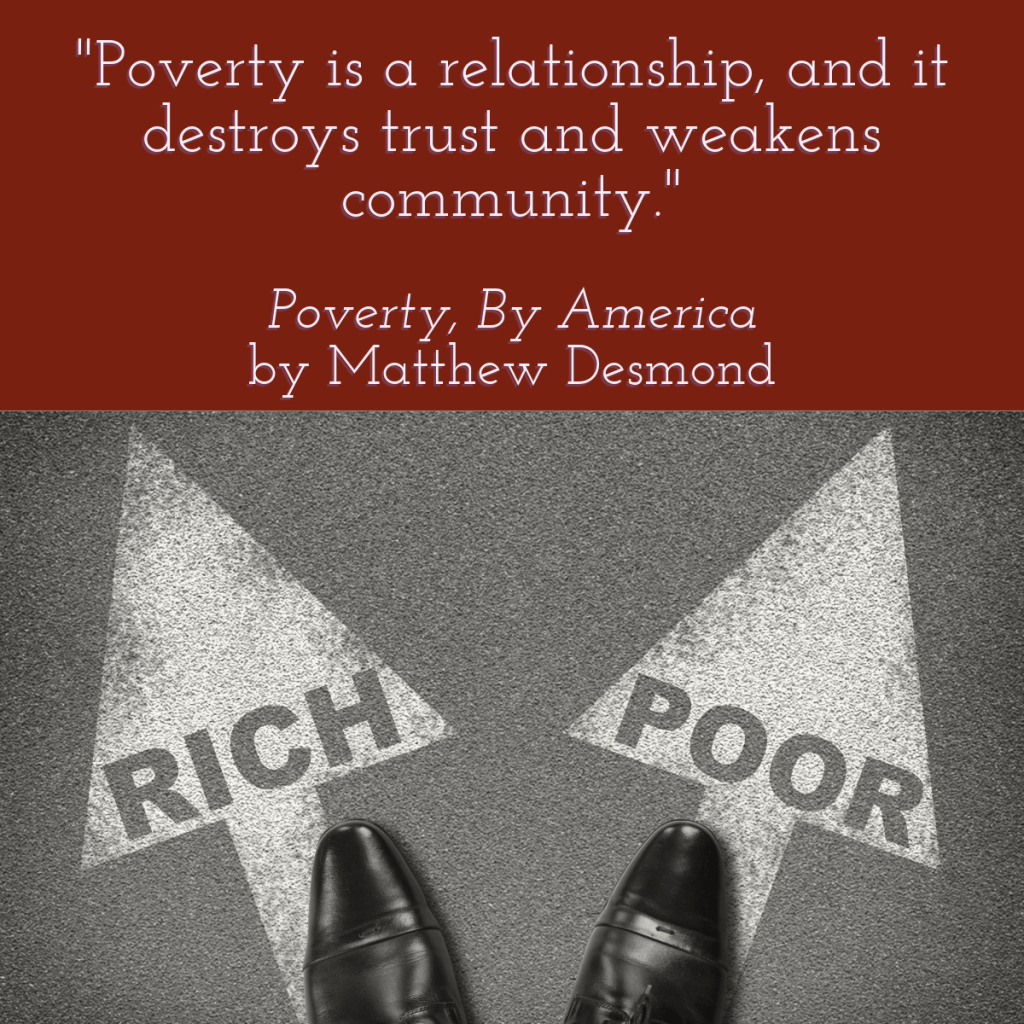
“Poverty in America” by Matt Desmond
Chapter 4: How We Force the Poor to Pay More
Exploring the dynamics of consumer exploitation and housing discrimination, Desmond exposes the predatory practices that disproportionately burden low-income communities. By dissecting the intersections of race, class, and geography in housing markets, he underscores the role of policy in perpetuating spatial inequality and housing insecurity. This chapter prompts reflection on the role of higher education institutions in fostering inclusive communities and advocating for equitable housing policies.
Chapter 5: How We Rely on Welfare
Desmond critiques the stigmatization of welfare recipients and the inadequacies of existing social safety nets, highlighting the vital role of government assistance in mitigating poverty. By examining the impacts of welfare reform and COVID-19 relief efforts, he underscores the importance of robust social welfare programs in supporting vulnerable populations. This chapter invites consideration of the role of higher education in advocating for social justice and supporting students experiencing economic hardship.
Chapter 6: How We Buy Opportunity
Analyzing the dynamics of wealth inequality and consumer culture, Desmond interrogates the narratives of meritocracy and individualism that justify economic disparities. By exploring the systemic barriers to economic mobility and the role of taxation in perpetuating inequality, he calls for a reevaluation of priorities and values. This chapter prompts reflection on the role of higher education in fostering economic literacy and promoting equitable access to opportunities for all students.
Chapter 7: Invest in Ending Poverty
Desmond advocates for proactive investments in poverty alleviation, emphasizing the moral imperative and economic benefits of eradicating poverty. By proposing policy solutions and highlighting successful interventions, he challenges the notion of scarcity and underscores the potential for collective action to effect meaningful change. This chapter invites consideration of the role of higher education institutions in research, advocacy, and community engagement to address poverty and inequality.
 ANNALIESE M. BAKER