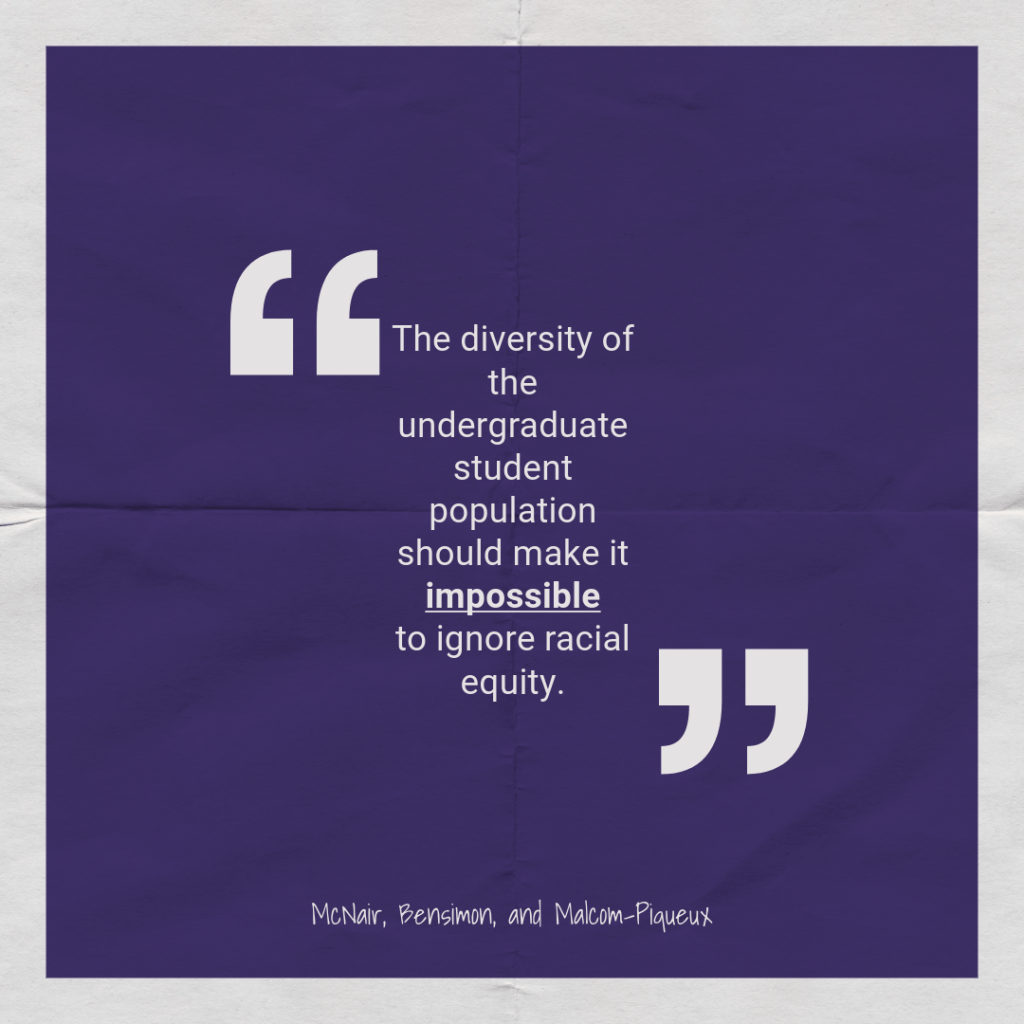
“From Equity Talk to Equity Walk” by Tia Brown McNair, Estela Mara Bensimon, Lindsay Malcom-Piqueux is a practical handbook designed to assist colleges and universities in achieving equitable outcomes within their institutions. Based on research projects sponsored by leading educational organizations, this guide offers concrete strategies and real-world examples to help educators navigate the complexities of promoting equity, with a particular focus on racial equity. By providing guidance on building an equity-minded campus culture, aligning strategic priorities, analyzing data through an equity lens, and fostering inclusive excellence, the book equips academic leaders and practitioners with the tools they need to dismantle institutional barriers and promote equitable outcomes in higher education. Aimed at college and university presidents, provosts, faculty, and staff, this indispensable resource serves as a roadmap for transforming equity from a mere buzzword into actionable change on campus.
Chapter 1: Understanding Equity in Educational Environments
Educators committed to equity engage in a thorough examination of institutional policies, practices, and structures to discern the underlying causes of inequities and to foster an environment conducive to student success, particularly for historically marginalized groups. This chapter emphasizes the imperative for institutions to cultivate learning environments that embrace diversity and inclusion, recognizing the diverse backgrounds and needs of their student populations. Central to this understanding is the recognition of how racism and beliefs in human hierarchy have shaped educational systems and practices. Equity, as elucidated in this chapter, focuses on providing equal opportunities for minoritized students to achieve equitable outcomes and participation in educational programs, thereby narrowing achievement gaps. Moreover, the chapter provides an overview of key concepts essential for effective examination and implementation of equity principles.
Chapter 2: Recognizing and Addressing Whiteness as a Norm
Equity-minded practitioners acknowledge whiteness as a pervasive norm within higher education institutions, operating subtly through institutional structures, policies, and practices to racialize outcomes and culture. This chapter delineates various obstacles hindering efforts to achieve equity, including the denial of racial realities, avoidance of discussing race, and the prevalence of white privilege and institutionalized racism. It underscores the importance of confronting racial inequities directly rather than attributing them solely to individual deficiencies or socioeconomic factors. Through equity-minded approaches, practitioners can challenge and dismantle systemic barriers that perpetuate racial disparities.
Chapter 3: Leveraging Data for Equity-Minded Practices
This chapter underscores the utility of data, when utilized in equity-minded ways, as a crucial tool for understanding and addressing inequities experienced by racially minoritized populations in educational settings. It outlines practical examples illustrating common barriers encountered by institutions in leveraging data for equity purposes, emphasizing the importance of disaggregating data by race/ethnicity to identify and address equity gaps in student outcomes. Additionally, it highlights the significance of fostering equity-minded sensemaking among practitioners through collaborative analysis of disaggregated data and open-ended discussions aimed at identifying actionable strategies to mitigate disparities.
Key Takeaways:
- Comprehensive Examination: The chapters emphasize the importance of a thorough examination of institutional structures, policies, and practices to identify and address systemic barriers to equity in educational environments.
- Recognition of Whiteness: Practitioners must recognize and confront whiteness as a norm within higher education institutions, understanding its pervasive influence on institutional culture and outcomes.
- Data-Informed Equity: Leveraging data in equity-minded ways can facilitate the identification and mitigation of equity gaps, fostering a more inclusive and equitable educational environment.
Implications for Community Colleges:
- Enhanced Institutional Awareness: Community colleges can benefit from adopting a comprehensive approach to examining institutional structures and practices to identify and address barriers to equity, thereby fostering a more inclusive learning environment.
- Critical Race Consciousness: By recognizing and addressing whiteness as a norm within their institutions, community colleges can cultivate a more racially conscious environment conducive to addressing systemic inequities.
- Data-Driven Decision Making: Community colleges can leverage disaggregated data to identify areas of inequity and inform targeted interventions aimed at improving outcomes for racially minoritized student populations.
 ANNALIESE M. BAKER