Online, Hybrid (asynchronous/synchronous) Canvas Course
Project detail and gallery; instruction authored and presented by Annaliese M BakerOnline
Instructional Design Goals
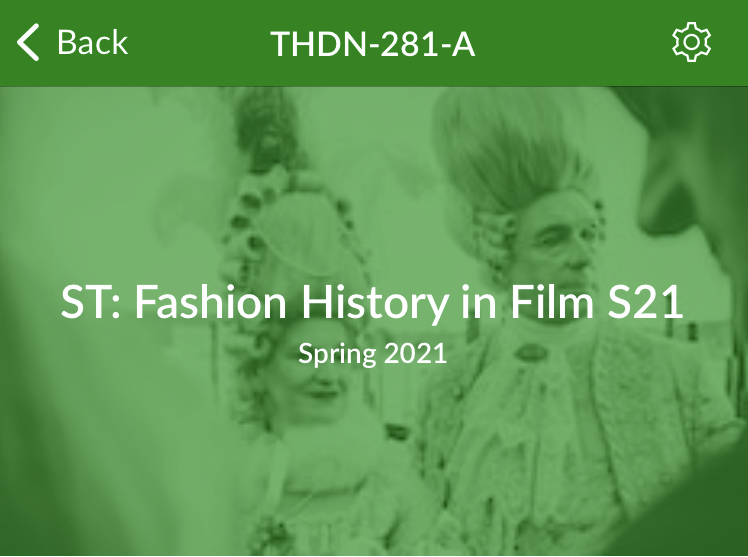
Course Overview: This course offers students a survey of key cinema costume designs and designers whose work has shaped modern aesthetic, characterization, and practice. Far from being mere accessories, costumes/clothing designed and worn are key elements in the construction of iconic cinematic identities. The course will examine links between the designs we see on screen and the theories that have constructed them; unifying the work of designer, performer, and director in crafting cinematic characters that become a part of modern mythology.
Pedagogical Approach:
The course employs a constructivist pedagogical style, encouraging active engagement with visual and textual analysis, critical discussion, and creative application. Instruction integrates theoretical exploration with practical critique, fostering a reflective learning environment. Scaffolding techniques support the gradual development of analytical and interpretive skills, while collaborative learning reinforces students’ ability to synthesize diverse perspectives.
Student Learning Outcomes:
- By the end of this course, students will:
- Artistic Recognition: Identify and articulate the techniques used in cinema costume design and their significance in visual storytelling.
- Theoretical Understanding: Apply diverse theoretical frameworks to interpret the relationship between costume design, character development, and cinematic themes.
- Critical Analysis: Analyze their own and others’ interpretations of costume design, considering historical, cultural, and artistic contexts.
- Textual Precision: Engage with literary, artistic, and material texts with critical precision and interpretive depth.
- Interdisciplinary Interpretation: Synthesize insights from various sources to evaluate the influence of language, genre, and historical context on cinematic costume design.
- Effective Communication: Present well-reasoned analyses and interpretations through written and oral formats, demonstrating clarity and academic rigor.· Recognize the techniques used in at least one art form
Delivery and Course Structure: The course adopted a blended delivery model, incorporating synchronous and asynchronous learning components:
Synchronous Components:
- Weekly live discussions on Tuesdays and Thursdays (10:00 a.m. – 11:20 a.m.) conducted via Zoom, focusing on film analysis, historical fashion periods, and key concepts.
- Interactive Q&A sessions and real-time feedback during virtual office hours.
Asynchronous Components:
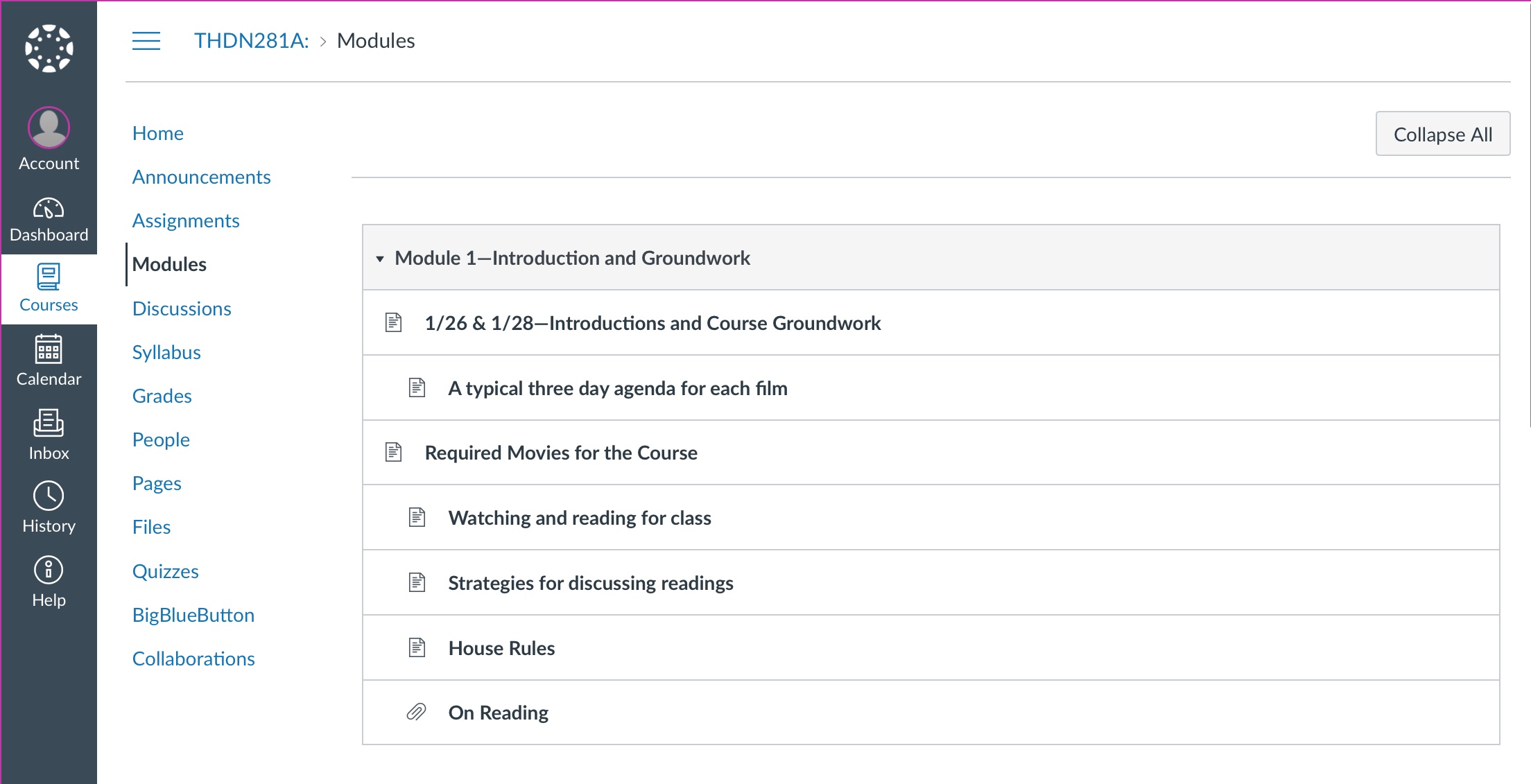
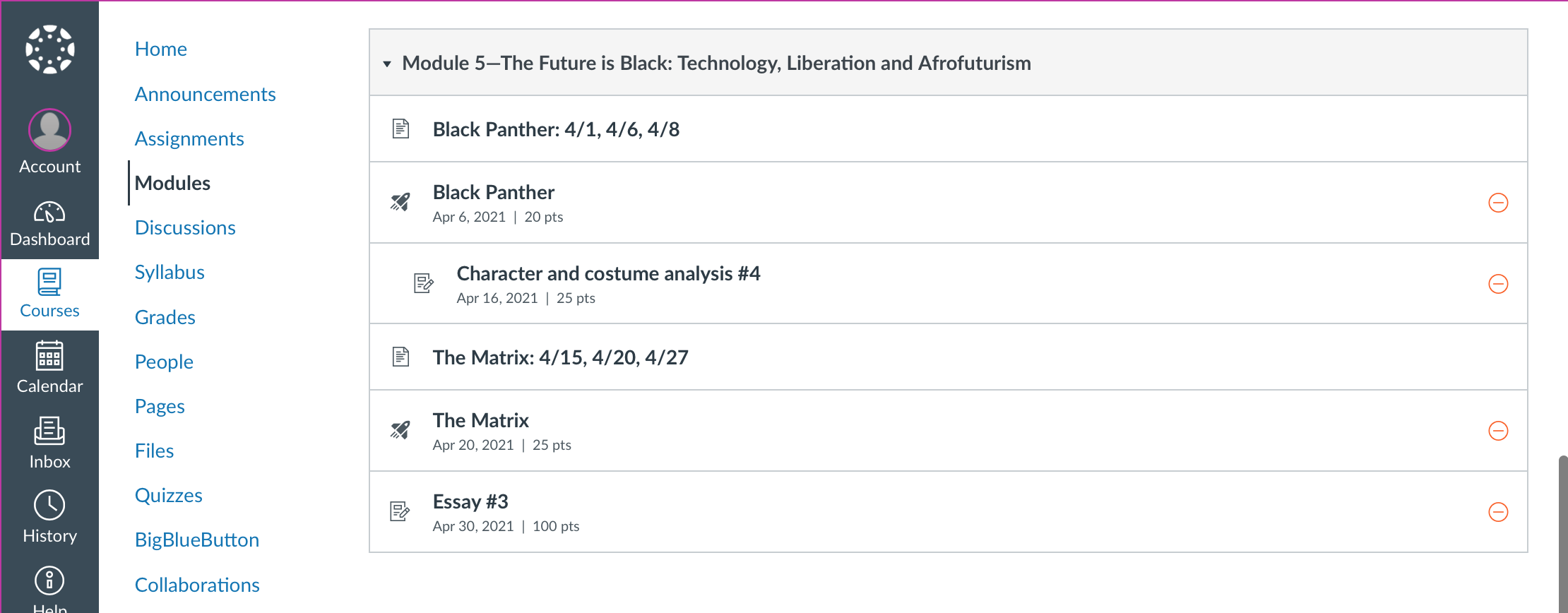
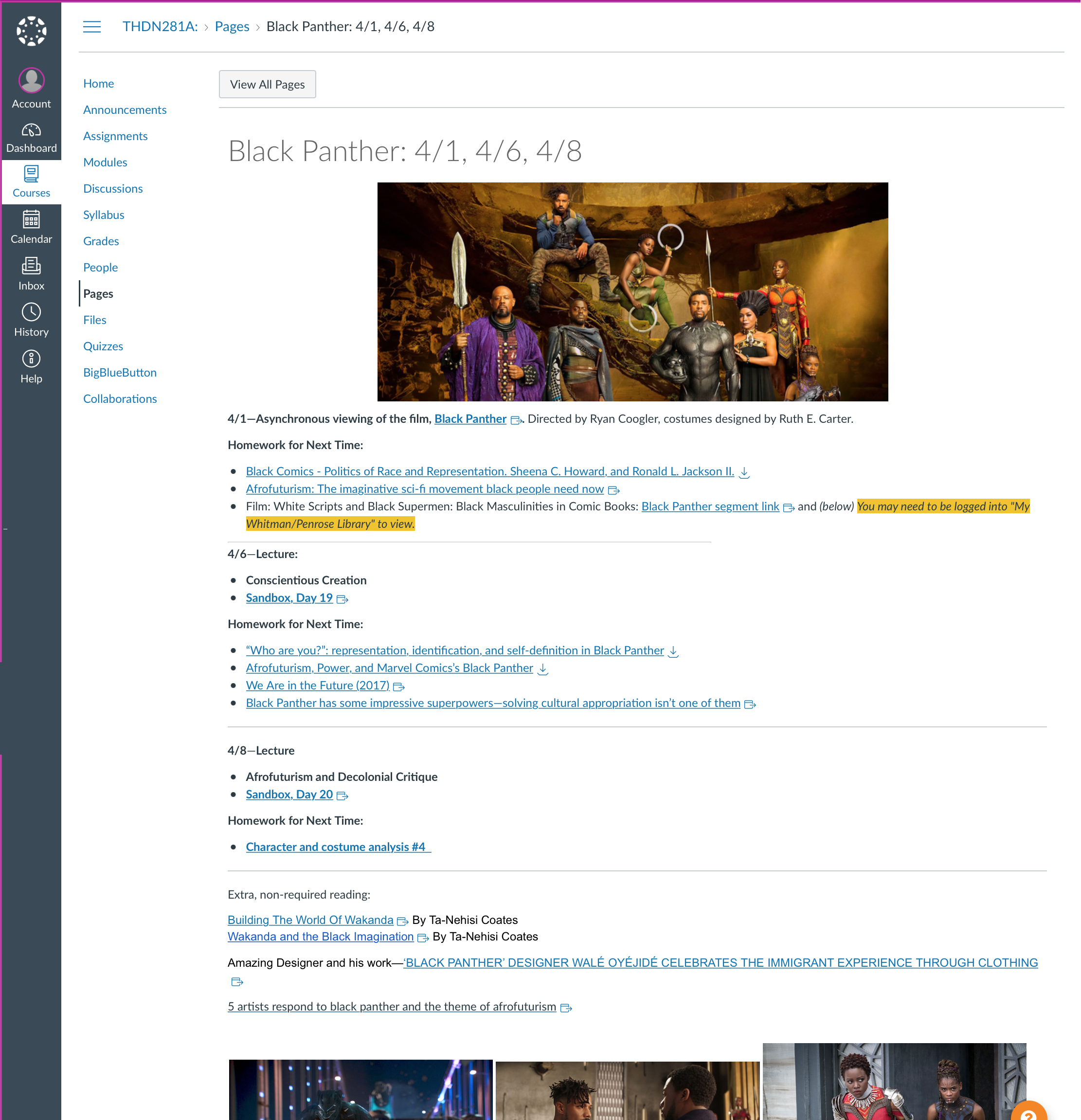
- Independent viewing of films at the start of each module, complemented by guided readings and pre-recorded lectures available on Canvas.
- Self-paced exploration of foundational terms and concepts, with collaborative discussions facilitated through Google Drive and Canvas forums.
Assessment and Engagement:
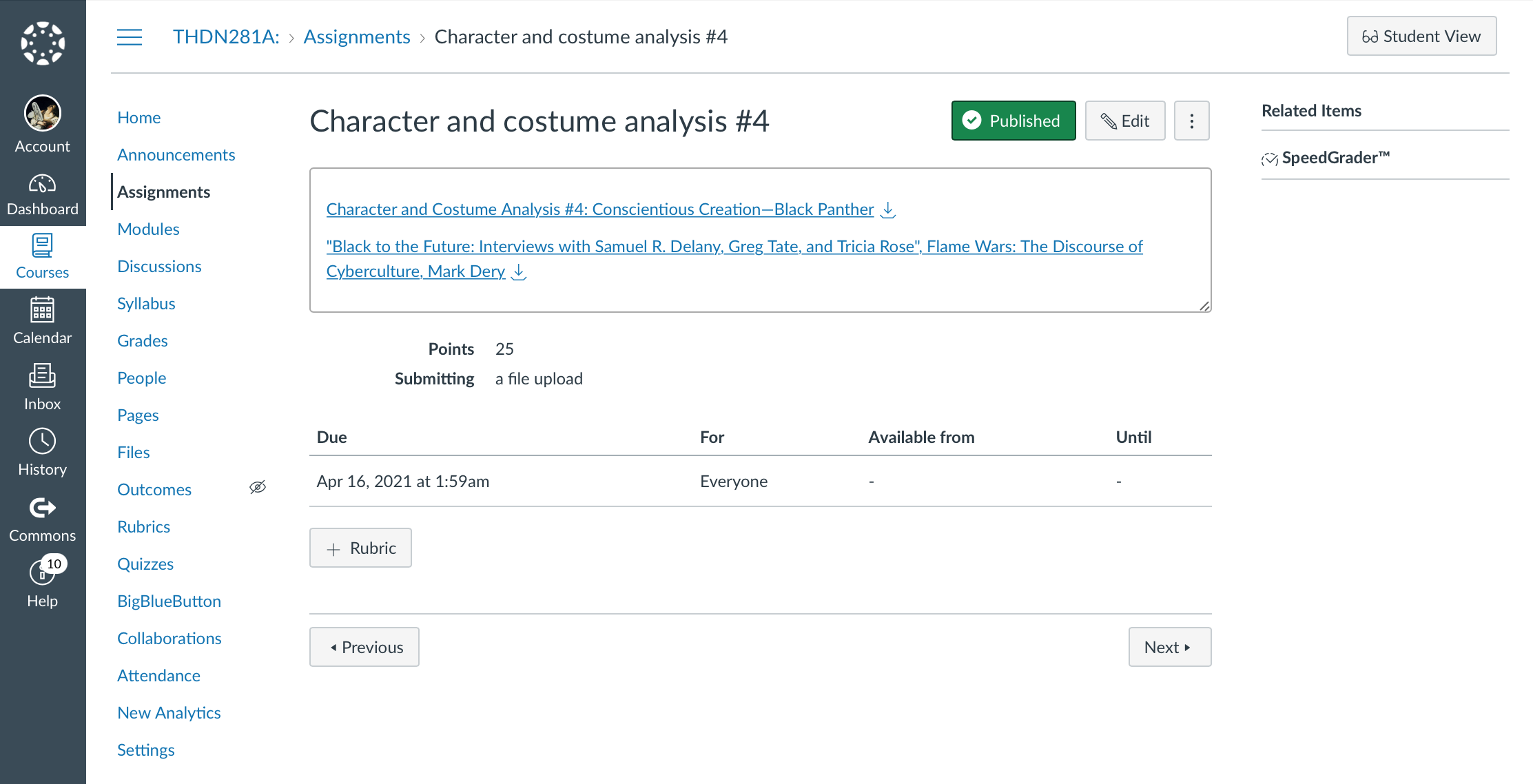
- Reflective assignments connecting theory to practice.
Requisite entry level knowledge and skills: Students enrolling in this course should possess:
- Resource Accessibility: Reliable access to the required digital tools, including a stable internet connection, to support active participation in hybrid course activities.
- Technical Proficiency: Basic familiarity with Canvas for navigating course content and submitting assignments.
- Digital Literacy: Competency in using Google Drive for collaborative projects and Zoom for synchronous sessions.
- Academic Background: Foundational knowledge of post-secondary coursework, including skills in critical reading and analysis.
Notes: For a recorded walk-through of this short course, please click here.
 ANNALIESE M. BAKER