Asynchronous Canvas Course (migrated from Brightspace)
Project detail and gallery; instruction authored and presented by Annaliese M BakerOnline
Instructional Design Goals
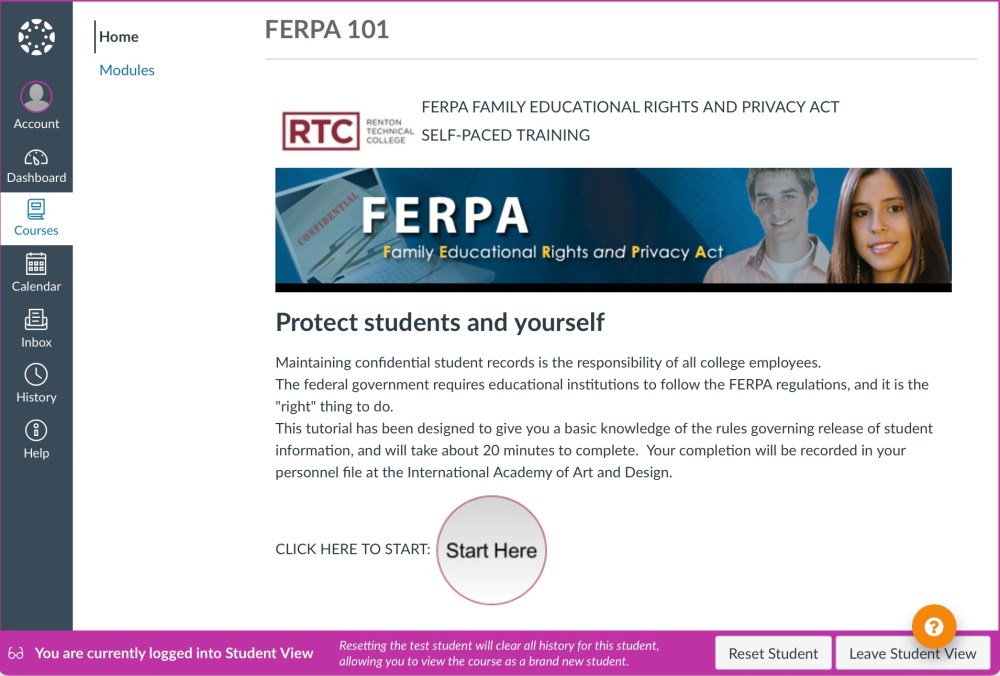
Instructional problem: Early career instructors hired to teach in a post-secondary setting often times have training and experience in their area of scholarship, but are unfamiliar with the civil, constitutional, contractual, and consumer rights, which regulate. Student rights in higher education in the United States are accorded by bills or laws that institutions must be compliant with. One such law is the Family Educational Rights and Privacy Act of 1974 (FERPA). There was a deficiency by early career academics in the knowledge of FERPA and how that law informs the privacy of the students they will be regulating. Knowledge of FERPA law and scenarios where this law would be applied would help them to be better educators in these learning environments.
Requisite entry level knowledge and skills: Those taking the course would be early career instructors with the requisite terminal degree in their area. The early career academics would be familiar with FERPA as a student, but not as an educator. Those enrolled would have basic knowledge of online communication systems as well as training in the LMS.
Instructional design statement: New/early career academics will be introduced to FERPA law and see its application in real-world scenarios in preparation for their academic careers.
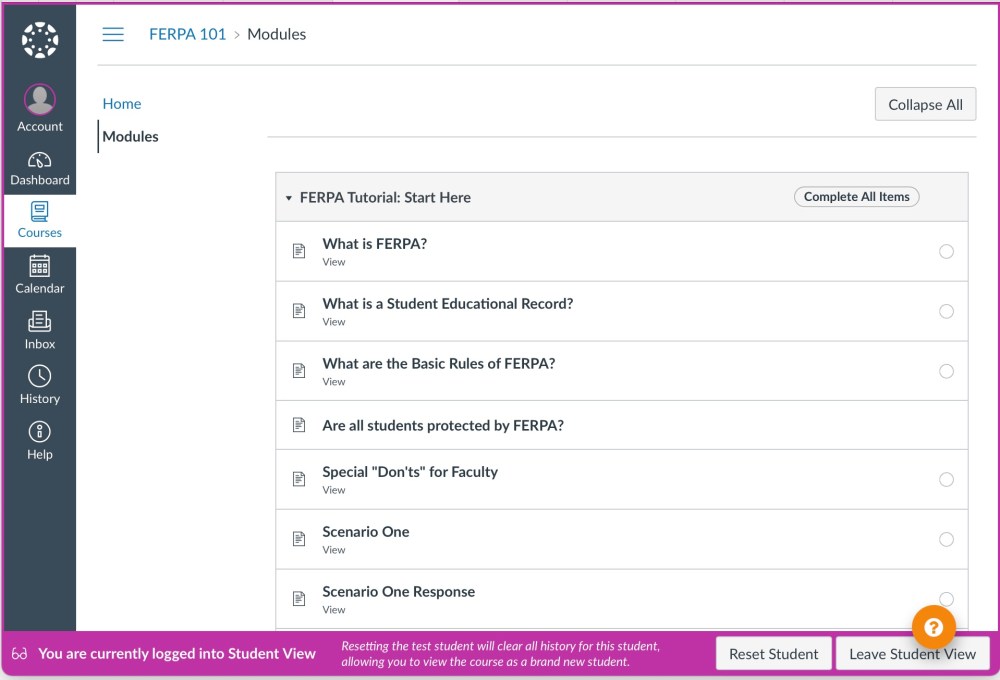
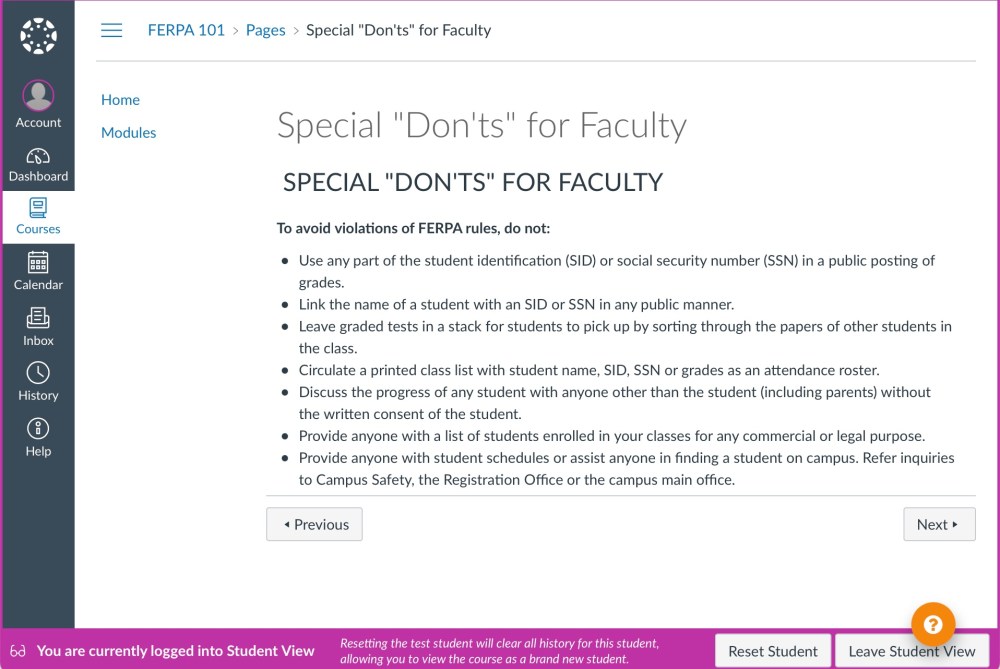
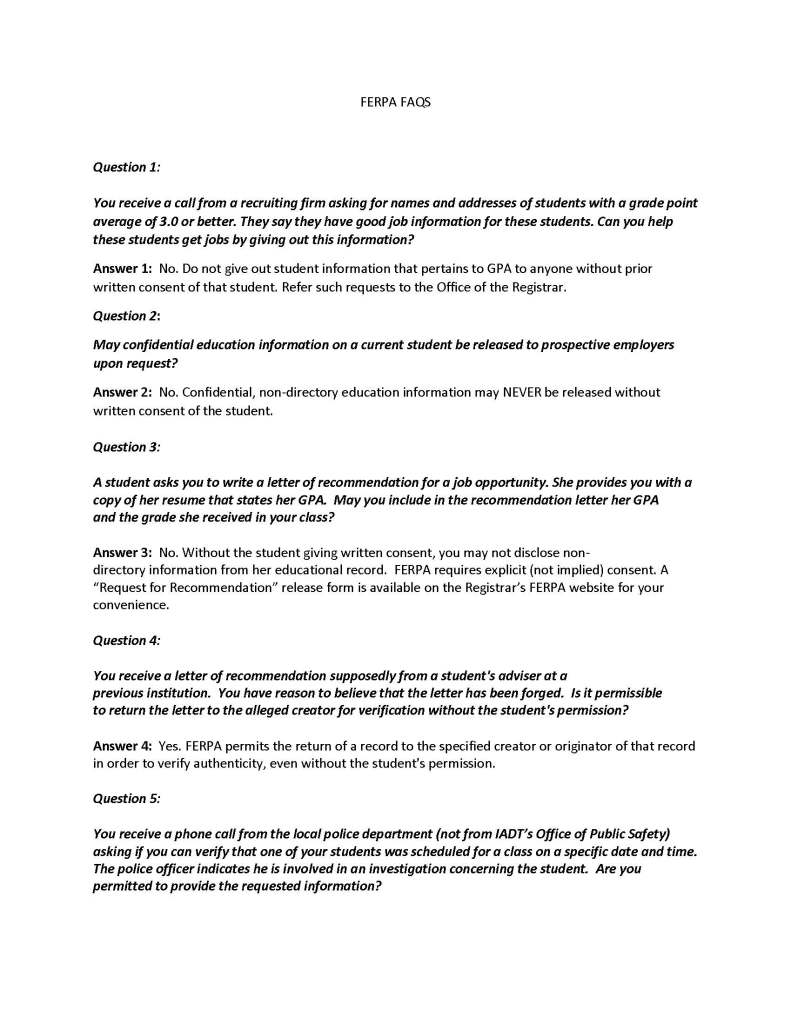
Notes: This course was a standalone course that could be taken asynchronously online and had a completion with a certification component as assessment at the end. Based on formative feedback, a “FERPA FAQ’s” downloadable PDF was generated that applied the law in multiple scenario-based contexts. This PDF could be printed off by the new hire for reference in their own work. This training was originally authored via Brightspace, later migrating to Canvas. For a recorded walk-through of this short course, please click here.
 ANNALIESE M. BAKER