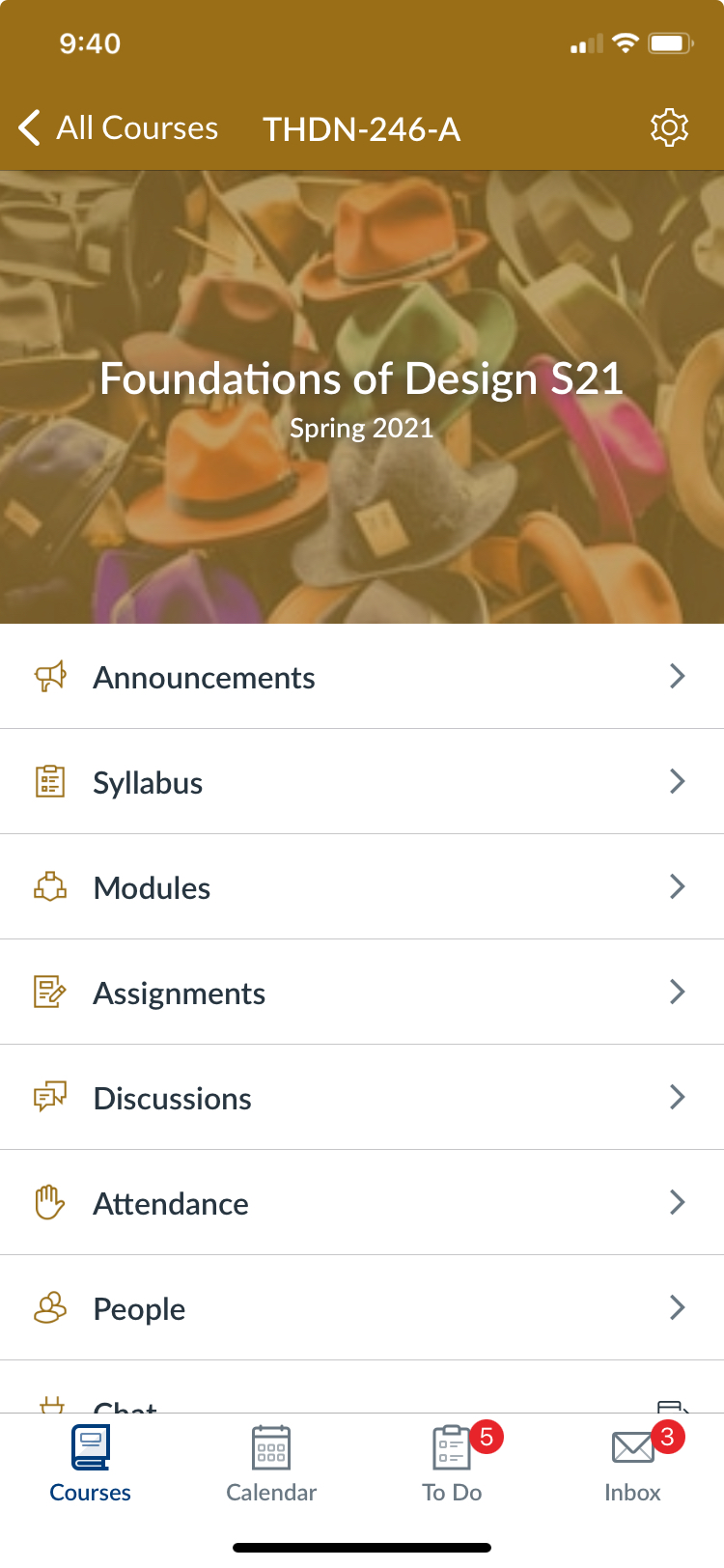
Online, Hybrid (asynchronous/synchronous) Canvas Course
Project detail and gallery; instruction authored and presented by Annaliese M BakerOnline
Instructional Design Goals
Course Overview: This course offers an introduction to the fundamental principles and practical applications of theatrical design, encompassing scenic, costume, lighting, and sound design. Through a combination of theoretical exploration and hands-on projects, students will engage with artistic concepts such as color theory, balance, and texture, as well as discipline-specific skills. Emphasis is placed on fostering a critical and artistic perspective, developing foundational technical skills, and understanding the collaborative processes integral to theatrical production. The course will include both synchronous and asynchronous components to provide a flexible yet structured learning experience.
Pedagogical Approach: The course employs a constructivist pedagogical style, emphasizing active learning through project-based activities and collaborative problem-solving. Instruction is designed to encourage student engagement with both theoretical and practical aspects of theatrical design, promoting experiential learning. Scaffolding techniques are used to build upon students’ prior knowledge and gradually increase task complexity, fostering independent critical thinking and creativity.
Student Learning Outcomes:
By the end of this course, students will:
- Technical Proficiency: Develop foundational technical skills necessary for theatrical design, utilizing appropriate tools and software.
- Analyze and Evaluate: Demonstrate the ability to critically assess theatrical designs, considering artistic and technical elements.
- Design Application: Develop and present projects that incorporate basic artistic principles (e.g., color, balance, texture) across scenic, costume, lighting, and sound design disciplines.
- Theoretical Knowledge: Articulate key theories and methodologies within theatrical design and their practical applications.
- Collaboration: Demonstrate an understanding of the collaborative process during theatrical production, including effective communication and teamwork.
Delivery and Course Structure: supplemented by asynchronous activities: Regular reflective exercises to connect theoretical knowledge to practical applications.
Synchronous Components:
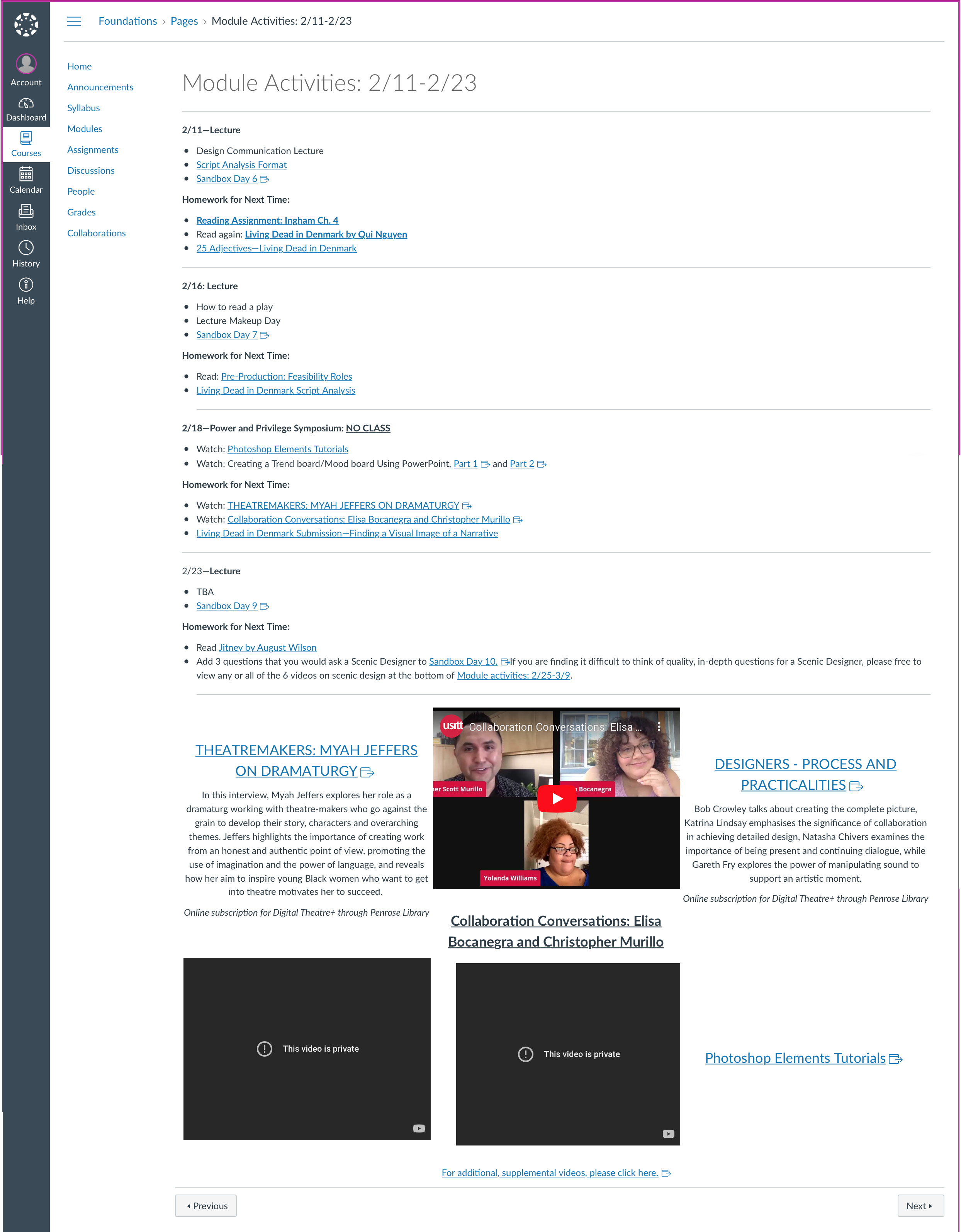
- Weekly live lectures on Tuesdays and Thursdays (10:00 a.m. – 11:20 a.m.) delivered via Zoom, focused on key concepts and group discussions.
- Real-time feedback on student projects during virtual office hours.
Asynchronous Components:
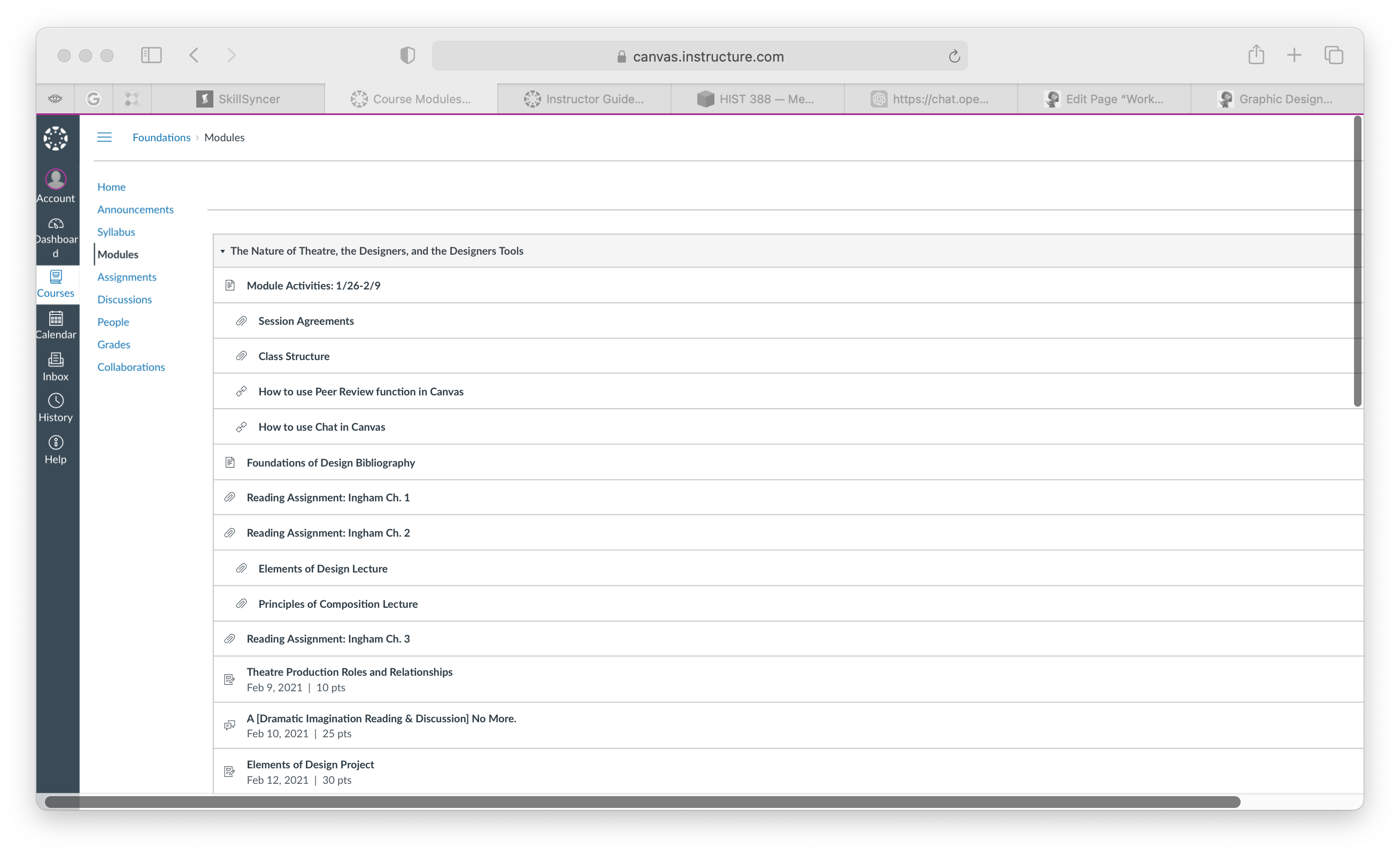
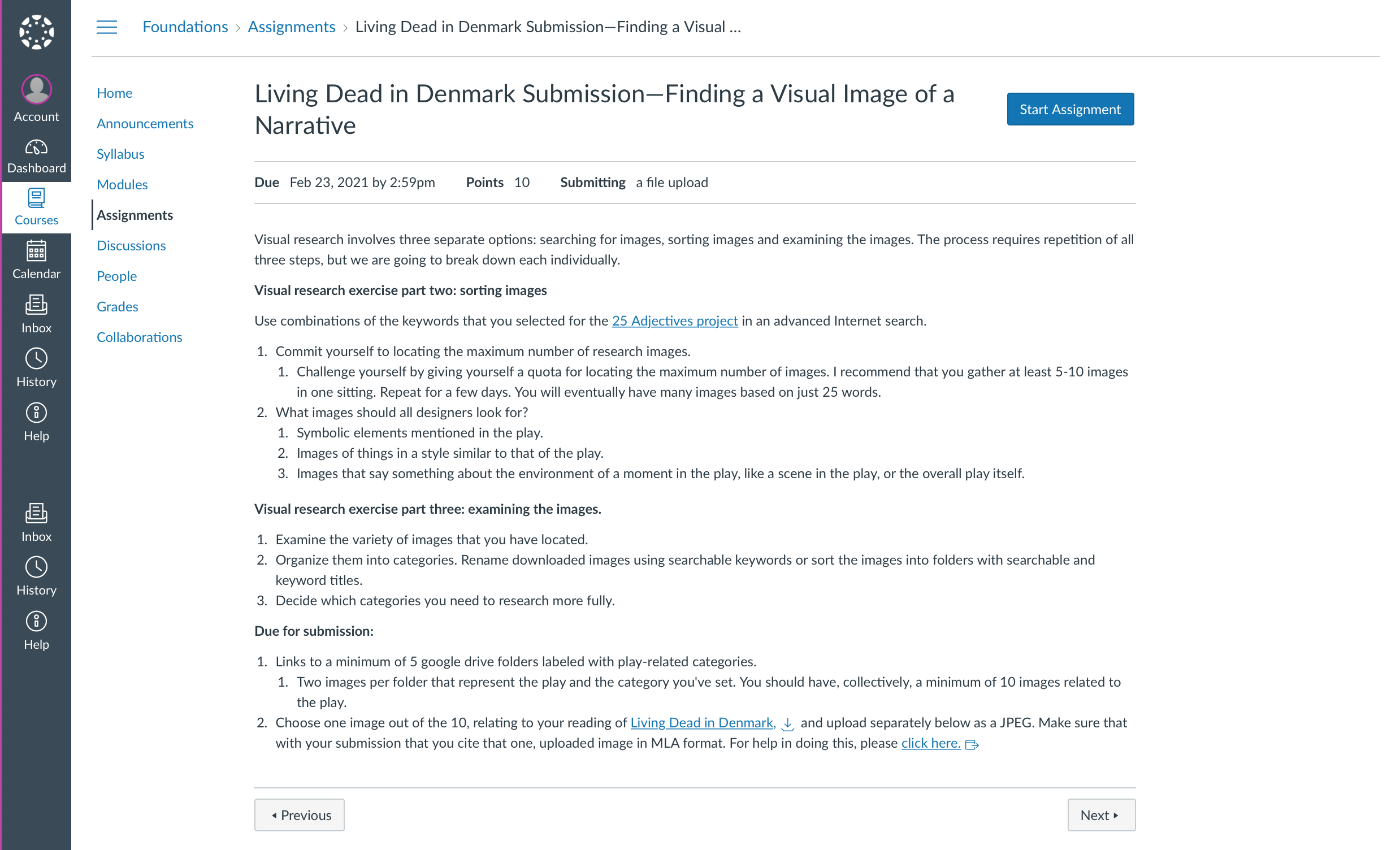
- Independent study modules on Canvas, including pre-recorded video lectures, readings, and design exercises.
- Collaborative peer reviews and discussions facilitated through Google Drive and Canvas discussion boards.
Assessment and Engagement:
- Project-based learning with iterative feedback loops.
Requisite entry level knowledge and skillsStudents enrolling in this course should possess:
- Resource Management: Access to required digital tools and a stable internet connection to support hybrid course participation.
- Technical Proficiency: Familiarity with navigating Canvas, the institution’s Learning Management System (LMS).
- Digital Literacy: Basic operational knowledge of Google Drive for document sharing and collaboration, as well as Zoom for synchronous sessions.
- Academic Background: Foundational understanding of post-secondary level coursework, with the ability to engage in critical analysis and creative problem-solving.
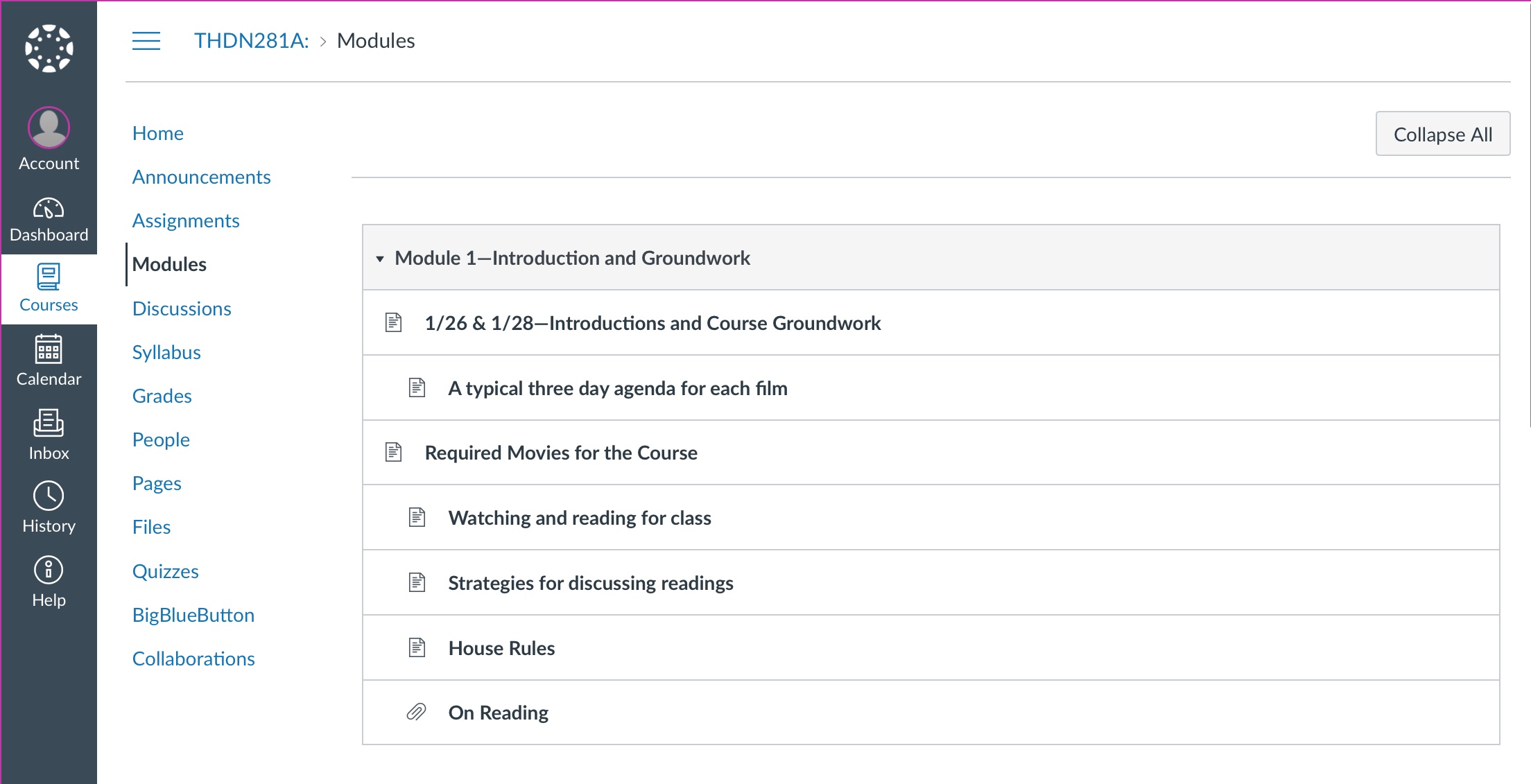
Notes: For a recorded walk-through of this short course, please click here.
 ANNALIESE M. BAKER